




How Much Does a Yacht Cost to Maintain Annually? Complete Guide
Quick Answers
The annual maintenance cost for a yacht is approximately 10%–15% of its purchase price.
30–40-foot yachts require about $20,000–$60,000 per year;
50–60-foot yachts cost $80,000–$250,000;
$300,000–$900,000 for 70–90-foot yachts;
$1 million–$5 million or more for superyachts over 100 feet.
Purchasing a yacht is not only a lifestyle choice but also entails significant long-term financial commitments. While many buyers focus solely on the initial purchase price, they often overlook the annual yacht maintenance costs. According to YachtWorld's research on the real cost of yacht ownership, annual maintenance expenses typically account for 10%–15% of the purchase price, with costs varying considerably based on the yacht's size and usage patterns.
As a yacht owner with 10 years of sailing experience, I aim to provide a comprehensive guide on how much does a yacht cost to maintain annually. This includes both routine maintenance and hidden expenses, empowering you to make a more informed assessment of cash flow and budget planning before buying a yacht.
Table of Contents
- What Does Annual Yacht Maintenance Cost Cover?
- Annual Yacht Maintenance Cost by Yacht Size
- Annual Yacht Maintenance Cost Breakdown
- Hidden Yacht Maintenance Costs
- Annual Maintenance Cost Examples for Different Yachts
- Is It Cheaper to Own or Charter a Yacht?
- How to Reduce Your Annual Yacht Maintenance Cost
- Suitable for vs Not suitable for
- FAQ
What Does Annual Yacht Maintenance Cost Cover?
Many people assume that yacht running costs per year are limited to engine maintenance or hull cleaning. In reality, annual yacht maintenance expenses are far more complex than imagined. They generally encompass four major categories of expenditure:
1. Basic Mechanical and Hull Maintenance
This represents the most direct yacht maintenance cost, typically including:
• Engine, generator, and other mechanical system upkeep
• Hull cleaning, anti-corrosion, and anti-fouling treatments
• Routine inspections of electrical systems and navigation equipment
• Annual safety inspections and statutory surveys
✅ While this portion represents a smaller percentage of total costs, it is critical for ensuring the yacht's safety and operational integrity.
2. Daily Yacht Operating Expenses
This section covers the annual yacht operating costs that most newcomers should truly focus on, primarily including:
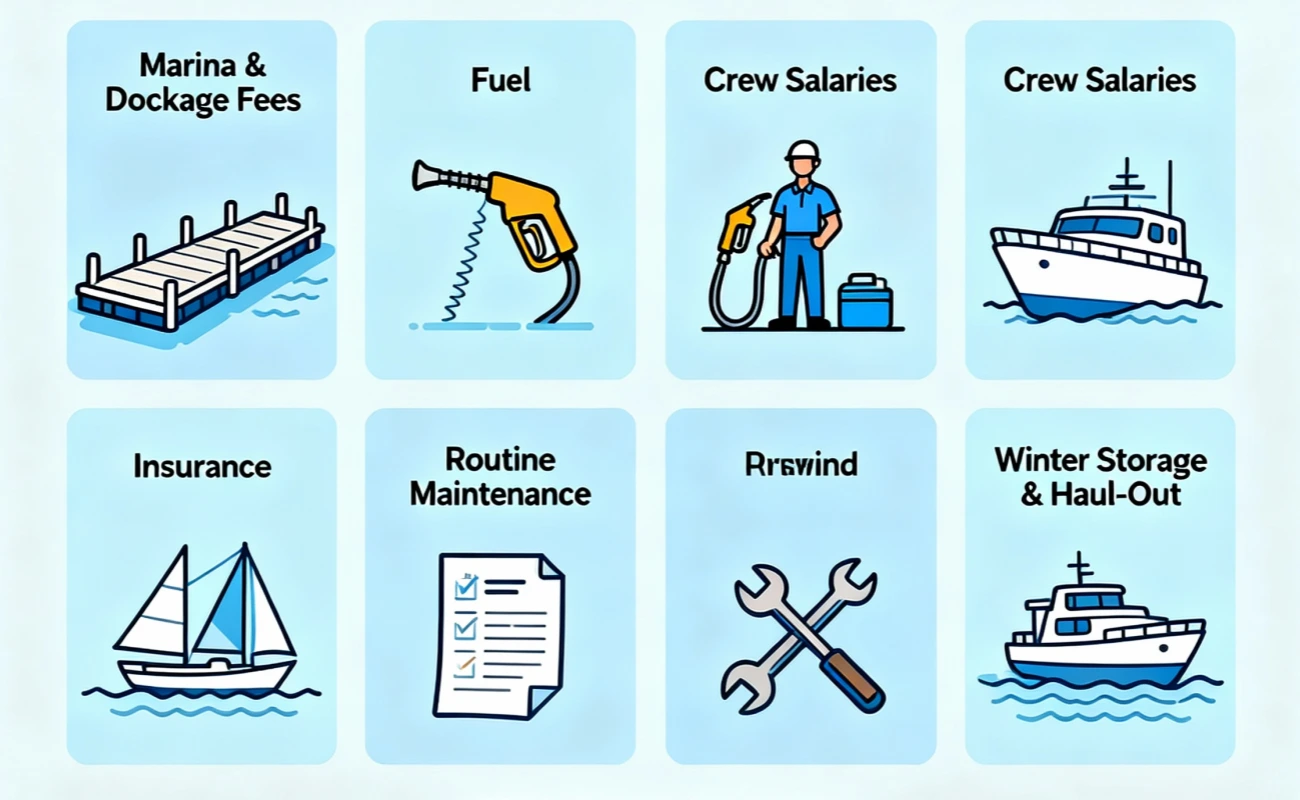
• Marina & Dockage Fees
• Fuel
• Crew Salaries
• Insurance
• Routine Maintenance
• Winter Storage & Haul-Out
✅ Many confuse maintenance costs with annual operating expenses, but they differ significantly. Focusing solely on upkeep can easily lead to underestimating true yearly expenditures.
3. Long-Term Ownership Costs
When treating a yacht as an asset, consider ownership costs, including:
• Depreciation
• Taxes (import duties, VAT, local taxes)
• Loan Interest
• Management Fees
✅ These expenses may not involve direct annual cash outlays, but they impact your overall return on assets and comprehensive financial planning.
4. Hidden/Unexpected Costs
Yacht ownership's hidden expenses are also the most overlooked by newcomers, such as:
• Sudden system or mechanical failures
• Port surcharges
• Navigation or electronic equipment upgrades
✅ Major repairs can cost $50,000–$200,000 per incident, representing the primary source of unexpected yacht maintenance expenses.
Annual yacht maintenance expenses encompass not only mechanical upkeep and hull cleaning but also daily operational costs, long-term holding expenses, and unforeseen expenditures. Understanding these four major expense categories enables more accurate budgeting for yacht acquisition and prevents underestimating annual outlays.
Annual Yacht Maintenance Cost by Yacht Size
As a boat owner with 10 years of sailing experience, I've found that annual yacht maintenance costs don't increase linearly. Instead, they rise in steps as the yacht's size, system complexity, and usage patterns increase. Simply put, moving from 30 feet to over 100 feet means each size category brings a significant jump in annual cash flow pressure.
Below, I'll break down the actual annual cost to maintain a yacht based on mainstream market sizes, helping you establish a clear budget before purchasing.
Size (ft) Annual Cost Crew Requirement Typical Use Ideal Buyer
30–40 $20K–$60K Owner-operated Coastal cruising Beginner yacht buyers
50–60 $80K–$250K Small crew Business & leisure Upper-middle-class families
70–90 $300K–$900K Full crew Long-range sailing High-end social / investment buyers
100+ $1M–$5M+ Multi-shift crew Charter & commercial Ultra-high-net-worth individuals
Annual Yacht Maintenance Cost Chart
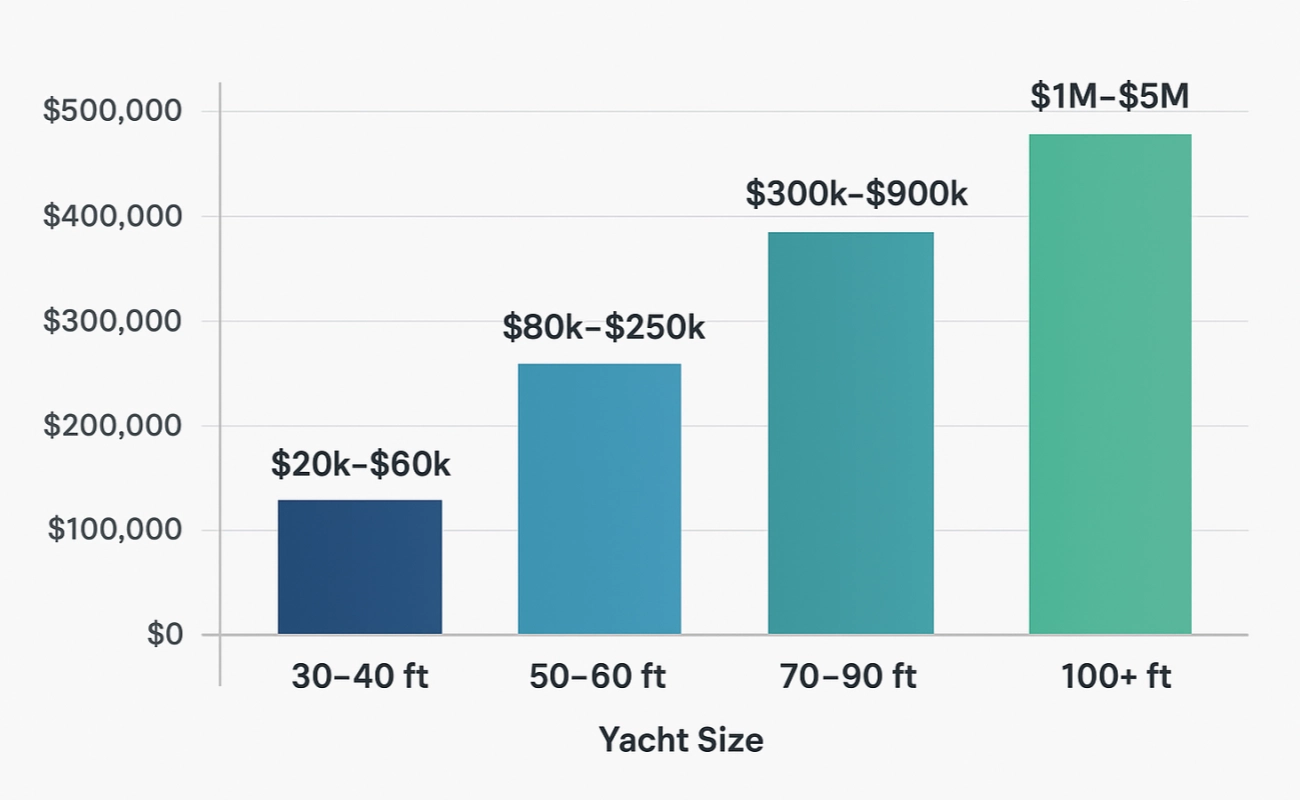
I wish to emphasize one point: the annual maintenance cost of a yacht does not simply follow the principle of “the bigger, the pricier.” It is influenced by multiple factors—including size, the complexity of mechanical and electronic systems, crew configuration, and the waters navigated—resulting in a stepwise increase. Understanding this is crucial for accurately budgeting annual yacht operating costs and assessing one's cash flow capacity.
Annual Yacht Maintenance Cost Breakdown
I'm often asked, “What exactly is the annual maintenance cost for a yacht?” In reality, the annual yacht maintenance cost breakdown isn't a fixed expense but consists of multiple highly variable costs. Different regions, yacht types, and usage frequency can cause annual expenses to vary significantly.
To provide clarity on each expense, the annual yacht maintenance costs are categorized into six major groups below, following the standard classification used by North American yacht management organizations like BoatUS. Each category is analyzed in detail:
1. Dockage & Marina Fees
• USA: 30–50 ft $6,000–$18,000 / year, 70+ ft $30,000–$80,000+ / year
• Mediterranean/Caribbean: May double during peak season
• Winter Discounts: 20%–50% off
2. Fuel Costs
• Powerboats: $10,000 – $300,000+ / year
• Sailboats: $5,000 – $15,000 / year
• Fuel expenses vary significantly based on usage hours, differing by up to 5x.
3. Insurance
•Premium Rates: 0.5%–2%/year, influenced by vessel value, age, operating waters, and operator experience.
•Private Yachts Typically: $5,000–$150,000/year
4. Routine Maintenance & Repairs
•Small Vessels: $3,000–$10,000
• Medium: $10,000–$40,000
• Large: $50,000–$200,000+
• Emergency repairs may exceed hundreds of thousands of dollars.
5. Crew Salaries & Expenses
• Captain: $60,000 – $180,000
•Deckhand: $35,000 – $70,000
•Engineer: $70,000 – $150,000
•Additional expenses for lodging, insurance, training, and travel.
•Crew costs account for 30%–45% of total operating expenses.
6. Winter Storage, Haul-Out & Taxes
• Small Yachts: $2,000–$6,000
• Medium Yachts: $6,000–$20,000
• Large Yachts: $30,000–$100,000+
Annual yacht maintenance costs extend beyond mere repairs. They comprise six major recurring expenditures: mooring fees, fuel, insurance, maintenance, crew, storage, and taxes. Fluctuations in any of these components directly impact your annual cash flow pressure. Understanding these breakdowns enables more precise budgeting and financial planning before purchasing a yacht.
Hidden Yacht Maintenance Costs
I've noticed many buyers only factor in “visible costs” when budgeting, overlooking the nearly inevitable hidden yacht maintenance expenses—these are the key factors making yachts high-risk assets. Below are the most common and easily underestimated hidden costs:
1. Emergency Mechanical Failures
Common sudden breakdowns include:
• Main engine failure
• Generator damage
• Hydraulic system failure
• Propeller shaft and propeller issues
Single-incident cost range: $5,000 – $300,000+
✅ These expenses are often not fully covered by insurance, making them a major pitfall in annual yacht operating costs that can directly blow budgets.
2. Corrosion & Saltwater Aging
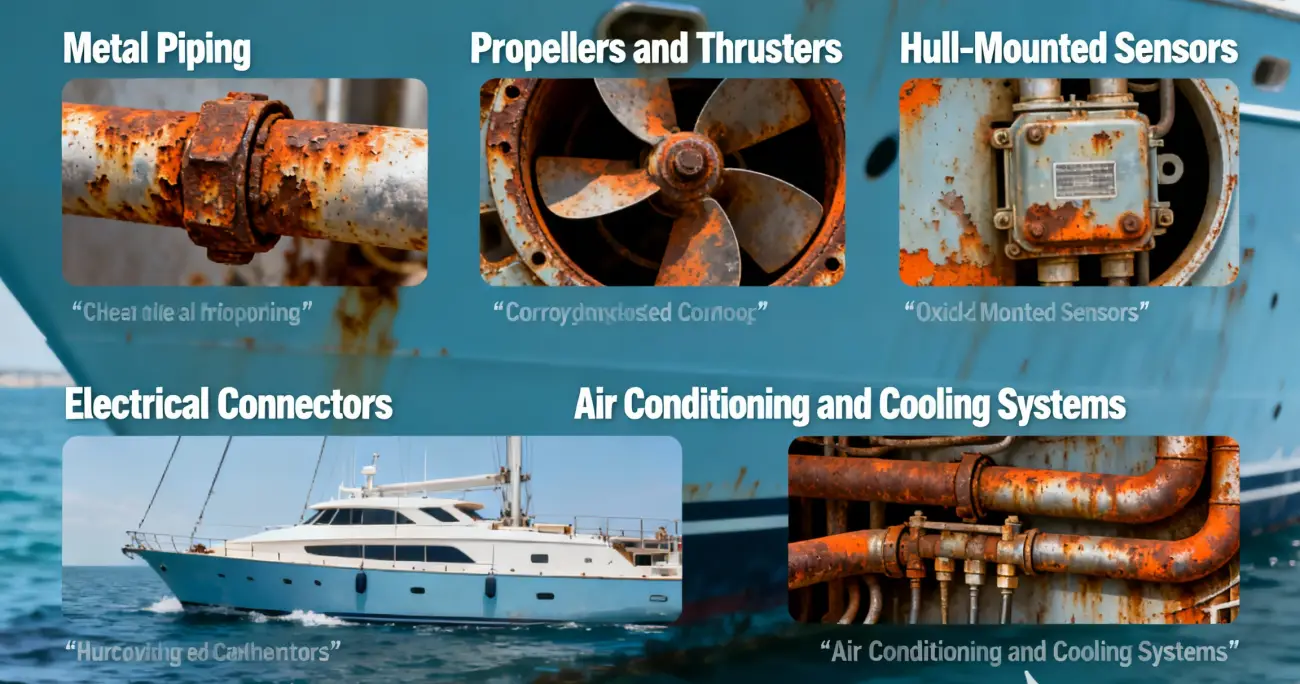
Common hidden corrosion points:
• Metal piping
• Propellers and thrusters
• Hull sensors
• Electrical connectors
• Air conditioning and cooling systems
Annual hidden corrosion repair costs: $2,000 – $150,000+
✅ Many novice owners mistakenly assume “a boat looks new, so it won't need major repairs,” but salt spray corrosion is largely unrelated to visible signs of age.
3. Temporary Marina & Port Charges
Common Triggering Scenarios:
• Temporary berthing during peak season
• Mandatory port calls for storm shelter
• Port scheduling delays
• Unplanned berthing without prior reservation
Per-occurrence Fee: $300 – $10,000+
✅ During Mediterranean or Caribbean peak seasons, a single temporary berth combined with mandatory minimum stay requirements can incur tens of thousands of dollars in additional expenses.
4. Customs, Immigration & Cross-Border Fees
Common cross-border expenses include:
• Entry permits and customs clearance fees
• Temporary import duties
• Customs brokerage service fees
• Repeated fees for transiting multiple countries
Annual Fees:
• Intra-regional Voyages: $2,000 – $10,000
• International Multi-Country Routes: $15,000 – $60,000+
✅ When involving the EU, additional mandatory charges may include VAT withholding, charter taxes, and port service fees.
5. Crew Tips & Temporary Crew
Common Additional Expenses:
• Crew gratuities after high-end charters
• Bonuses after extended voyages
• Crew temporary leave → Emergency replacements
• Additional security or technical personnel
Annual Hidden Yacht Costs:
• Midsize Yachts: $5,000 – $25,000
• Large Yachts: $30,000 – $150,000+
✅ Crew costs encompass not only wages but also expenditures for the entire dynamic, variable human resource system.
6. Technology Upgrades & Obsolescence
Common systems subject to mandatory upgrades:
• Navigation and radar systems
• Communication and satellite networks
• Security and surveillance systems
• Automation control systems
• Environmental emission equipment
Upgrade Costs:
• Single System Upgrade: $10,000 – $50,000+
• Complete Electronic System Overhaul: $80,000 – $300,000+
✅ Many systems aren't replaced only when “broken,” but due to regulatory updates, technological obsolescence, or insurer requirements.
For most owners, the real “out-of-control” expenses aren't basic annual yacht maintenance costs, but these hidden yacht maintenance costs—nearly inevitable yet impossible to predict accurately in advance.
Annual Maintenance Cost Examples for Different Yachts
Based on my extensive experience monitoring the North American and Caribbean markets, the real cost of owning a yacht per year varies significantly across different yacht sizes. I've compiled four typical case studies to help you better understand the actual annual expenses of yacht ownership:
Yacht Type Purchase Price Annual Maintenance Major Expenses Typical Use
35ft Sailboat $180K–$280K $22K–$38K Marina fees + basic upkeep Weekend coastal cruising
55ft Family Motor Yacht $900K–$1.6M $110K–$190K Fuel + marina fees Multi-day family vacations
85ft Business Yacht $4.5M–$7.5M $480K–$820K Crew salaries Long-range sailing
140ft Superyacht $28M–$60M $2.8M–$5.5M+ Crew + port fees Global cruising & charter
From 35 feet to 140 feet, annual yacht operating costs increase in significant increments. For smaller self-piloted vessels, mooring fees and basic maintenance account for the largest share; whereas for large commercial and superyachts, crew salaries, fuel, port fees, and management systems become the primary cost drivers.
Understanding these real-world examples helps you more accurately assess cash flow and annual budgets before purchasing a yacht, preventing underestimation of operating costs.
Is It Cheaper to Own or Charter a Yacht?
Many people ask: Is it more cost-effective to buy a yacht outright, or is it better to just rent one when needed?
Yachts are almost never a money-saving asset. Only when usage frequency is sufficiently high, and with a stable home port and cash flow, can owning a yacht become a rational choice by spreading costs over the long term.
✅ Ownership vs. Charter Annual Cost Comparison (Based on a 55ft Mid-Size Motor Yacht)
Aspect Own Yacht Charter Yacht
Purchase Cost $1.2M (one-time) $0
Annual Maintenance & Ops $140K–$190K Included in rental
Fixed Annual Cash Flow ✅ Required ❌ None
Daily Usage Cost Lower with more use Higher with more use
Flexibility Low (port & seasonal limits) High (global options)
Hidden Risks Maintenance, depreciation Covered by charter company
Current Market Reference Rental Rates (55ft Motor Yacht):
• $22,000 – $38,000 / week (excluding fuel and gratuities)
• Peak Season + Mediterranean/Caribbean: Up to $45,000+/week
🔹 Annual Usage Day Cost Analysis
Scenario 1: Annual usage of approximately 2 weeks (14 days)
• Charter Cost: $25,000 × 2 weeks ≈ $50,000
• Ownership Cost: Annual fixed expenses ≈ $150,000+
✅ Conclusion: Chartering is more cost-effective than ownership. Most costs persist even when the vessel is idle.
Scenario 2: Approximately 1 month (4 weeks) of annual use
• Leasing Cost: $25,000 × 4 ≈ $100,000
• Ownership Cost: Annual fixed expenses ≈ $150,000–$190,000
✅ Conclusion: Leasing remains cheaper unless you place a high premium on “convenience of immediate access.”
Scenario 3: Approximately 6 months of annual use (high-frequency usage)
• Leasing Cost: $25,000 × 24 weeks ≈ $600,000
• Ownership Cost: Annual fixed expenses ≈ $160,000–$200,000
✅ Conclusion: Ownership is more cost-effective while partially preserving asset value.
🔹When is leasing more cost-effective than buying?
Purely rationally speaking, direct yacht purchase isn't suitable if you meet these criteria:
• Annual sailing < 3–4 weeks
• No fixed berthing requirements
• Prioritize “experiencing different vessel types or waters”
• Unwilling to bear the uncertainty of unexpected yacht maintenance costs
• Prefer not to have capital locked in illiquid assets long-term
✅ Luxury yacht charters offer lower risk, greater flexibility, and predictable cash flow.
🔹 When does ownership make financial sense?
Owning a yacht becomes economically viable only when all these conditions are met simultaneously:
• Actual annual usage ≥ 8–10 weeks
• Secure long-term berthing (private marina preferred)
• Ability to offset 20%–50% of ownership costs through commercial charter revenue
• Sufficient cash flow independent of yacht asset returns
• Viewing the yacht as a “lifestyle platform” rather than an investment vehicle
If your annual usage falls below 6–8 weeks, chartering is almost always financially preferable to owning. Ownership becomes economically viable only with extremely high usage frequency and stable cash flow.
How to Reduce Your Annual Yacht Maintenance Cost
I'm often asked: Is there a way to reduce annual yacht maintenance costs? Based on my decade of practical experience, the five most effective strategies are as follows:
1. Choose the Right Size
A common mistake among first-time buyers is “going big from the start,” assuming they won't need to upgrade later. However, yacht expenses don't increase linearly—they jump significantly:
• 40 ft → 55 ft: Costs typically double
• 55 ft → 75 ft: Costs increase another 1.5–2 times
• 90 ft+: Crew, insurance, and harbor fees all enter commercial-grade levels
✅ Core savings principle: Buy a size you “truly utilize fully,” not one you “imagine you'll use.”
Long-term data on yacht maintenance costs by size reveals:
•For personal recreational users, 35–50ft typically offers the highest “cost/experience ratio”
•Beyond 70ft, it becomes more of a “status asset” than a “value-for-money asset”
2. Strategically Plan Your Cruising Area
Yacht berthing locations impact annual expenses more significantly than vessel type.
High-Cost Waters:
•Mediterranean hotspots (Monaco, Saint-Tropez)
• Premium marinas in Florida, USA
• Peak-season ports in the Caribbean
Low-Cost Waters:
• Non-core ports in the southeastern USA
• Select ports in Mexico
• Certain regions in Southeast Asia and Turkey
For the same 55-foot yacht, annual berthing fees can range from $18,000 to $85,000.
✅ Strategy Summary
High-end waters for short voyages; low-cost waters for long-term mooring. Effectively reduces annual yacht docking fees by 30%–60%.
3. Regular Maintenance vs. Delayed Repairs
Putting off maintenance often turns minor fixes into major overhauls.
• $800 belt replacement → Delayed into $15,000 alternator damage.
• $2,000 antifouling paint → Delayed into $30,000 hull corrosion repair.
✅ The Right Logic: Regular maintenance is the “cheapest repair.”
Long-term Data Shows:
• Owners with Regular Maintenance: Lower total repair costs over 5 years and higher resale residual value.
• Owners with Delayed Maintenance: Higher average annual total costs and faster depreciation.
4. Shared Ownership & Yacht Management
If you can't use your yacht frequently, “full sole ownership” often isn't the most cost-effective solution.
Common Models:
• 2–4 owners share ownership.
• Professional management handles maintenance, scheduling, insurance, and crew.
• Usage time allocated in advance for each owner.
Core Advantages of Shared Ownership:
• Fixed annual expenses reduced proportionally
• Higher management efficiency
• Avoids costly losses from individual decision errors
✅ Ideal for: Individuals using the yacht 4–8 weeks annually who desire the “feel of owning a dedicated yacht.”
5. Charter Offset
Offsetting annual expenses through commercial charters when you're not using the yacht is the only truly scalable method to reduce maintenance costs.
Operational Logic:
• Yacht chartered out by professional charter companies during idle periods.
• Revenue applied toward crew wages, insurance, berthing fees, and routine maintenance.
Actual Offset Ratios:
• Light Charter: ≈ 20%–30%
• Moderate Chartering: ≈ 40%–60%
• High-Intensity Commercial Operation: Can cover 70%+
⚠ Note: Commercial chartering accelerates depreciation, increases maintenance frequency, and raises compliance costs.
✅ Suitable For:
• Those unconcerned with “absolute newness”.
• Those prioritizing the net cost of yacht ownership.
• Those with access to stable charter markets and port resources.
The true key to saving money on a yacht isn't cutting a single expense, but systematically reducing annual maintenance costs at the source through five critical decisions: size selection + berthing location + maintenance strategy + ownership model + commercial charter.
Suitable for vs Not suitable for
Purchasing a yacht is not only a significant financial investment but also a lifestyle choice. I believe that varying usage needs, cash flow situations, and risk tolerance can make a yacht either a luxurious experience or a financial burden. Different types and sizes of yachts suit different individuals. If you're unsure which vessel best fits your requirements, you can start by consulting Yacht Guide.
1. Suitable For
✅ High-net-worth Families Seeking Long-term Vacations
• Ample annual disposable funds.
• Desire stable, flexible, and private family vacations.
• Annual usage ≥ 4–6 weeks.
These families can afford annual yacht maintenance costs while maximizing usage frequency, enhancing lifestyle value.
✅ Business Hospitality Needs
• Business owners or high-end service industries.
.
• Yacht serves as a platform for business entertainment, client experiences, and events.
• Partial commercial charter can offset costs.
In these scenarios, the yacht functions not only as transportation but as a high-end social asset, ideal for frequent commercial use with ample budget.
✅ Yacht Enthusiasts + High-Frequency Users
• Genuine passion for sailing and frequent sea voyages.
• Enjoying onboard living and sailing experiences.
• Capable of arranging crew or self-operating.
High-frequency users significantly reduce per-trip costs while maximizing experiential value.
✅ Individuals with Asset Allocation Needs
• Viewing yachts as part of a global asset portfolio.
• Balancing lifestyle and asset management.
• Reducing net costs through shared ownership or commercial charter.
For certain high-net-worth individuals, yachts serve dual purposes as lifestyle assets and wealth management tools.
2. Not Suitable For
❌ Individuals with <2 weeks of annual usage
• Extremely low sailing frequency.
• High proportion of fixed expenses (berthing fees, insurance, crew).
Even for smaller yachts, annual maintenance costs far exceed actual usage value.
❌ Cash-strapped buyers
• Insufficient annual budget to cover fluctuating expenses.
• Unable to handle unexpected repairs, crew costs, or port scheduling fees.
Yacht's hidden expenses severely disrupt cash flow, leaving such buyers vulnerable to financial distress.
❌ Pure speculative investors
• Focus solely on appreciation or resale profits
• Indifferent to the user experience
Yachts are rarely cash-flow-positive investments; maintenance, depreciation, and hidden costs devour potential profits.
❌ Individuals extremely sensitive to “hidden expenses”
• Cannot tolerate unbudgeted costs (emergency repairs, crew gratuities, cross-border taxes).
• Easily compromised by cost pressures affecting the experience.
Even for smaller yachts, annual hidden expenses can reach tens of thousands of dollars. Long-term ownership proves stressful and unsatisfying for such individuals.
Yachts are not suitable for casual purchases. They align best with high-net-worth individuals, frequent users, lifestyle-driven buyers, or commercial operators—not infrequent users, cash-strapped individuals, or overly sensitive people.
Clearly identifying your category is key to preventing annual yacht maintenance costs from becoming a hidden burden.
FAQ
1. How much does a 50 ft yacht cost to maintain per year?
Annual yacht operating costs range from $80,000 to $250,000, including: - Mooring fees: $20k–$50k - Fuel: $20k–$60k - Crew: $20k–$40k - Insurance: $8k–$18k - Maintenance: $10k–$40k
2. What is the 10% rule for yacht maintenance?
Annual yacht maintenance costs typically amount to approximately 10% of the purchase price, potentially rising to 15%+ for high-usage or larger vessels.
3. Is yacht maintenance tax deductible?
Generally, private yacht maintenance costs are not tax-deductible. However, expenses related to commercial charters or business use may qualify for deductions. Consult local tax authorities such as the U.S. IRS or UK HMRC to avoid misreporting.
Annual yacht maintenance costs far exceed the purchase price. Focusing solely on hull upkeep or fuel expenses is insufficient for estimating true costs. Understanding factors like vessel size, crew requirements, mooring locations, hidden expenses, and the differences between leasing versus owning enables rational decision-making. This approach allows you to genuinely enjoy yachting life without being burdened by annual maintenance costs.
About the Author
Kate Morgan brings over a decade of sailing experience to her role as a seasoned contributor to publications including Superyacht Times and International Yachting. She is also a senior member of the International SuperYacht Society (ISS). Morgan maintains a deep focus on the global yacht market, maintenance costs, and the high-end nautical lifestyle, providing expert and practical guidance for owners and prospective buyers.
Disclaimer
This article is for informational purposes only and does not constitute investment, purchasing, or financial advice. Actual maintenance costs vary based on vessel type, size, usage frequency, mooring location, crew configuration, market fluctuations, and legal regulations. Consult a professional yacht advisor, tax specialist, or legal counsel before making any decisions.

NYE 2024 PRICES RELEASED!

WE HAVE ARRIVED! Our 7 New Vessels Are Making Waves in the Heart of Dubai Harbour

Sky Walker Yachts: UAE’s Largest Charter Operator is redefining the Custom-Yacht Building.

EID in Dubai: A fun long weekend awaits with onboard Sky Walker Yachts Ride & Slide itineraries.

Set sail on a journey of luxury and elegance with our new 62ft and 52ft yachts at Dubai Harbour!

Sky Walker: Dubai’s Largest Charter Operator is Redefining the Custom-Yacht Building.

It’s a date 🌹! Celebrating Valentine's Day onboard a luxury yacht - VIP Couple's Package

Sky Walker Yachts hosted the Management and golfing enthusiasts of the DP World Tour – RAK

Sky Walker Yachts Team Celebrates its Annual 2023 Year-End Party

What to Do on a Yacht in Dubai (2026): 10 Luxury Experiences You Can't Miss

 Sky Walker Yacht Rental 2021 - 2025


